Sales Funnel vs. Landing Page: Which One Drives Better Conversions?
Every click counts. But here’s the question: should you send that hard-earned traffic to a sleek landing page or guide them through a full-blown sales funnel? Pick wrong, and you could be bleeding conversions without even knowing it; pick right, and you might just watch your numbers skyrocket.
You’re a digital marketer scrambling to boost conversions. Maybe you’ve built sleek landing pages with killer designs or drafted multi-step sales funnels that should, in theory, convert like crazy. Yet the results feel underwhelming.
It’s frustrating: every click that doesn’t convert feels like cash slipping away. Did you waste ad budget sending visitors to a funnel that’s too long? Or did you over-complicate a simple offer with a giant email sequence?
Without a clear plan, you end up throwing darts in the dark: thus, missing out on leads, wasting time, and scrambling to fix it.
Read on to learn exactly what a landing page is, what a sales funnel is, and when and why to use each for better conversions. Discover how to tailor your strategy (and tools like Convertri) to your campaign’s goals and audience, and watch those conversions climb.
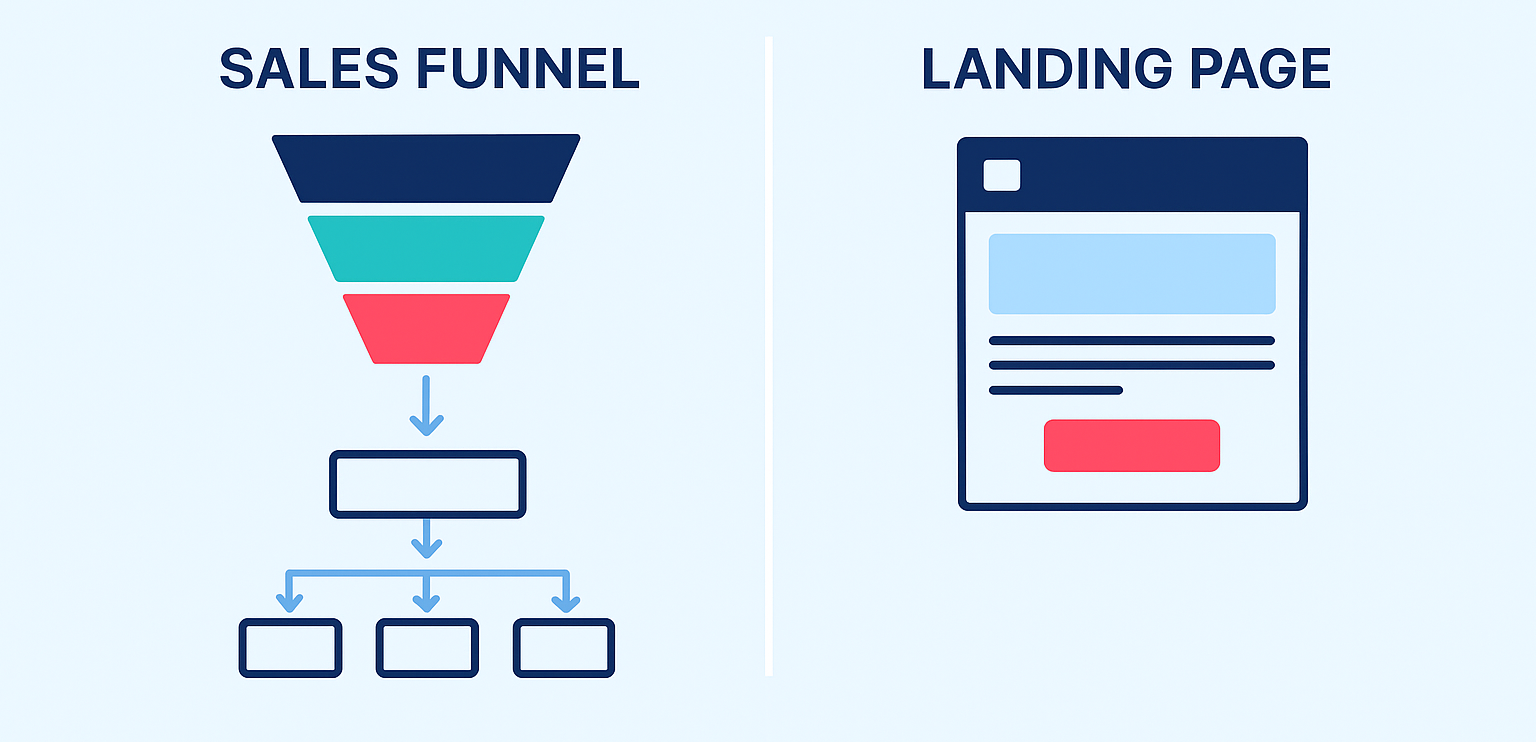
| What Are the Key Differences Between a Landing Page and a Funnel?A landing page is a web page focused on one specific action, whereas a sales funnel is a series of connected steps that nurture a prospect from their first click to the final sale. • Landing page: One page, one goal, no progression. • Funnel: Multiple steps (opt-in, sales page, checkout, upsells). |
Key Takeaways:
- A landing page is your targeted conversion tool for one campaign or offer. A sales funnel is a multi-step journey of pages and interactions that guide a prospect from first contact all the way to purchase.
- Use a landing page when you have a single offer or one-time campaign in mind. Use a sales funnel when you need to build relationships or sell higher-ticket items that require multiple touches.
- Both approaches rely on testing and clear messaging.
Convertri’s fast page builder can make creating and iterating on pages much easier.
What Is a Landing Page?
A landing page is a one-page conversion machine. It’s a standalone web page built for one purpose: to convert visitors to a single goal.
Unlike your multi-link homepage, a landing page has no distractions. It doesn’t have an extra menu or unrelated links. It might ask a visitor to sign up for a free guide, register for a webinar, claim a discount, or even make a purchase. In essence, it’s a digital salesperson with one job.
Each landing page targets one audience with one message and one CTA. For example, if you run Facebook ads promoting a free eBook on social media marketing, the landing page might only ask people to enter their email to download that eBook. No extra menu, no blog posts – just the offer front and center.
Examples of Landing Pages
There are different flavors, including:
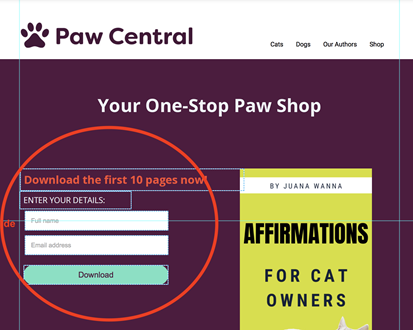
Lead Generation Landing Pages
Capture emails by offering a lead magnet (free report, checklist, quiz, etc.). The funnel can then nurture these leads by email.
Sales Landing Pages
A longer page that sells a single product or service directly (often seen in online courses or coaching programs).
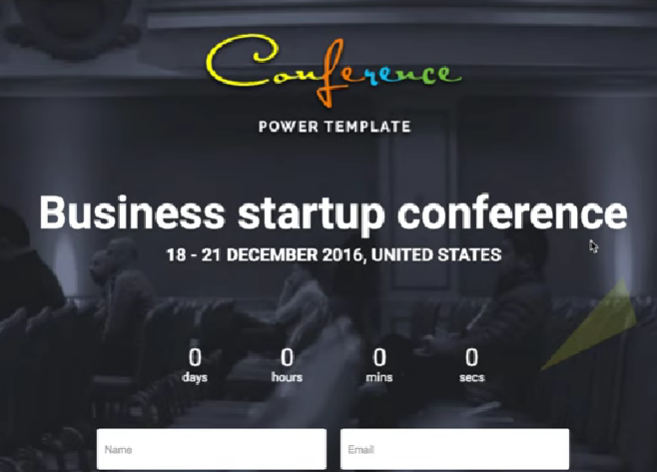
Webinar/Event Pages
Promote an event and collect registrations.
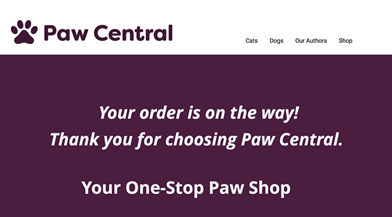
Thank-You Pages
Confirm an action (like signing up) and sometimes upsell another offer.
All of these aim for a single action: opt-in or purchase.
Pro Conversion Facts
A well-built landing page can skyrocket your conversion rates. For example, one study shows companies with 10–15 optimized landing pages see 55% more conversions than those with fewer pages.
Smart marketers know that doubling down on landing pages pays off: businesses with 21–40 pages got 300% more conversions, and those with 40+ pages 500% more leads than those with fewer.
Even in strict benchmarks, successful landing pages often convert way above average: good pages have been reported to achieve 20–50% conversions, versus the industry average of around 2–6%.
Bottomline: More targeted pages = more opportunities to convert.
How Landing Pages Work
Landing pages are usually reached via specific marketing channels – a PPC ad, a social media post, or an email link. For example, if you run Google ads for a coaching service, the ad might point to a page that briefly explains the offer and asks, “Ready to chat?” with a contact form (no menus, no unrelated info). That page’s sole mission is to capture the lead or sale. Once the potential customer acts, you can follow up via email or phone.
High-converting landing pages typically have:
- a clear headline
- a compelling subheadline
- benefit-oriented copy
- a strong CTA button
- social proof (testimonials, stats)
They also use lead capture forms to grab visitor details. An embedded form for name and email is essential for lead gen pages.
It has become easier to create optimized landing pages with no-code builders. Convertri, for example, offers drag-and-drop templates for funnels and pages.
What Is a Sales Funnel?
A sales funnel is your end-to-end customer journey. It’s a multi-step process that guides prospects through stages of awareness, interest, and eventually purchase. Think of it as a map of the customer journey: instead of one page, you have a sequence of pages and emails that gradually warm up a visitor and lead them toward the sale.
Multi-Step Structure
Unlike a single landing page, a funnel is a series of pages, each with its own purpose. For example, a basic funnel might look like: Opt-in page → Thank-you page → Sales page → Upsell page → Downsell page. Each page moves the prospect one step closer to buying.
- Opt-In Page: Captures the lead with a lead magnet or quiz. It starts the funnel by collecting an email in exchange for a free resources.
- Sales Page: Once leads are in your system, the funnel might deliver a longer sales page offering your main product or service.
- Upsell/Downsell Pages: After a purchase, or if the prospect hesitates, you can offer additional products (upsell) or a lower-priced alternative (downsell) to maximize revenue.
Because funnels can span multiple communications, they allow for a richer storytelling and trust-building approach. You might start by educating a cold audience about a problem, then introduce your solution, then finally ask for the sale.
Automation & Segmentation
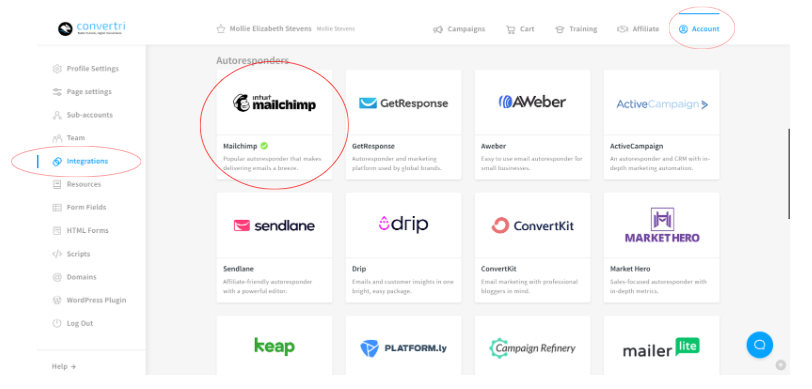
Sales funnels are typically automated. Convertri, a funnel builder, integrates with email marketing/CRM tools to send sequences of emails, follow-ups, and reminders. It may also segment leads (warm vs. cold), personalize messages, and add prospects to different lists.
For example, someone who downloaded your guide (top-of-funnel) might get one set of emails, whereas someone who showed interest (clicked a link) might get a targeted sales pitch email.
Data & Testing
One advantage of a funnel is tracking where people drop off. A funnel builder records conversion rates at each stage, so you can spot bottlenecks and A/B test different pages or emails.
Bottom line: A sales funnel is like a laboratory for fine-tuning your sales process.
What are the Key Differences between a Landing Page and a Funnel?
Here’s a clear comparison table showcasing the key differences between landing pages and sales funnels.
| Feature / Factor | Landing Page | Sales Funnel |
| Definition | A single, focused web page designed to drive one specific action (e.g., sign-up, download, or sale). | A multi-step sequence of web pages and/or emails guiding prospects through the buying process from awareness to purchase. |
| Goal | Get visitors to take one immediate action. | Nurture and convert leads over multiple steps, often selling more complex or higher-ticket offers. |
| Structure | One page with a single call-to-action (CTA). | Multiple connected pages: opt-in, thank-you, sales page, upsell/downsell pages, follow-up emails. |
| Complexity | Simple to create and launch; minimal setup. | More complex to plan and build; requires mapping the customer journey and integrating multiple tools. |
| Best For | Single campaigns, quick promotions, event sign-ups, lead magnets, or simple product offers. | Relationship-building, selling higher-priced items, multi-product offers, or campaigns needing education and follow-up. |
| Traffic Sources | Paid ads, social media posts, email campaigns, blog posts – all pointing directly to the page. | Can start with the same traffic sources but continues with retargeting ads, email marketing, and automated follow-ups. |
| Conversion Measurement | Single conversion rate (e.g., % of visitors who take the desired action). | Multiple conversion rates across the funnel: opt-in rate, upsell take rate, final sale conversion, etc. |
| Optimization Focus | Headline, copy, visuals, form fields, CTA button. | Each stage’s content, offers, segmentation, and automation performance. |
| Time to Launch | Often minutes or hours with a good builder like Convertri. | Days to weeks, depending on complexity, content, and automation setup. |
| Example | A lead generation landing page that offers a free social media checklist in exchange for an email. | An online course funnel starting with a free checklist, leading to a webinar, then a course sales page with upsell options. |
Visual Flow: Sales Funnel vs. Landing Page
Landing Page Flow
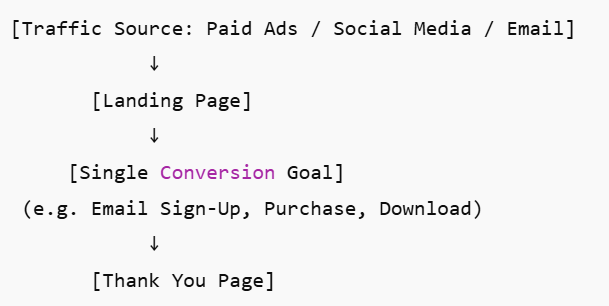
Focus: One page, one goal, minimal distractions.
Outcome: Immediate conversion or exit.
Sales Funnel Flow
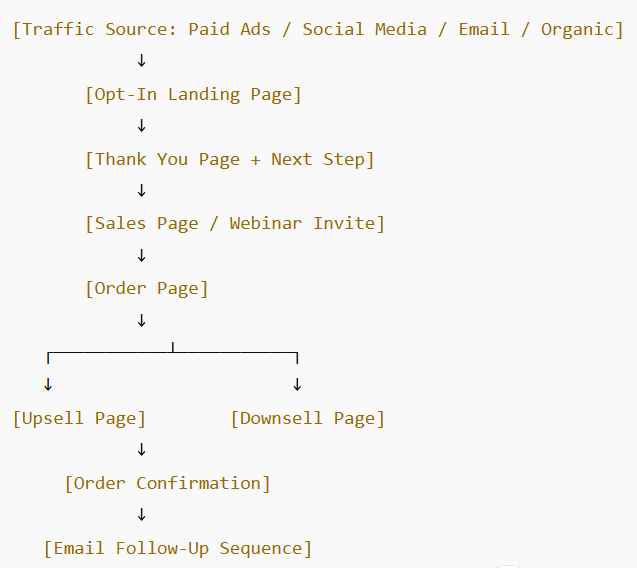
Focus: Multiple touchpoints to nurture, educate, and convert.
Outcome: Higher total conversions and potential for upsells.
Building and Optimizing for Conversions
No matter which you choose, some best practices apply:
1) Clarify Your Goal
Know the one action you want on a landing page (download, sign-up, buy). Know the sequence of actions in your funnel (opt-in → upsell → etc.).
2) Know Your Audience
Tailor content to your target. A funnel especially requires understanding “the stages of awareness”. Are they cold prospects or warm subscribers? Your messaging should match.
3) Strong Copy & Design
Use headlines and visuals that grab attention. Keep pages mobile-optimized.
4) Test Everything
A/B test headlines, images, button text, forms… For funnels, test different email subject lines or page elements. Testing can more than double conversions.
5) Use Lead Magnets
For landing pages, especially opt-in pages, offer a valuable lead magnet (e.g., an eBook, checklist, or webinar) to entice sign-ups.
6) Seamless Experience
In a funnel, make sure each step logically leads to the next. Thank visitors after actions and suggest the next step. Keep messaging consistent.
7) Tools and Platforms
Use reliable builders. For example, Convertri offers an all-in-one solution: it touts “blisteringly fast landing pages [and] sales funnels” with drag-and-drop editing. Other platforms include ClickFunnels or Kartra for funnels, and Unbounce or Instapage for landing pages. Choose one that fits your budget and skill level.
Both landing pages and funnels are part of your marketing strategy. A landing page often lives at the top of the funnel to capture interest, while a funnel spans the entire marketing funnel down to the final sale. The “best conversions” come from aligning each element – page design, copy, offer – with the right stage of the buyer’s journey.
Convertri for Pages & Funnels
Convertri is a cloud-based platform that specializes in fast-loading pages and funnel building. It offers:
- Page Speed: Convertri’s “accelerated page technology” means pages load in less than 3 seconds, which is crucial since slow loads kill conversions.
- Drag-and-Drop Editor: Like “Photoshop-for-your-browser,” you can place elements anywhere without rigid rows/columns.
- Funnels & Pages: You can build entire funnels (with opt-ins, upsells, downsells) or stand-alone landing pages using pre-made templates. It even supports dynamic text, showing different copy based on your ad’s keywords.
- All-in-One: Convertri integrates with email/CRM tools and has built-in analytics. Its blog notes it’s “beginner-friendly, lightning-fast, and includes prebuilt templates”. It’s ideal for marketers who want to launch quickly.
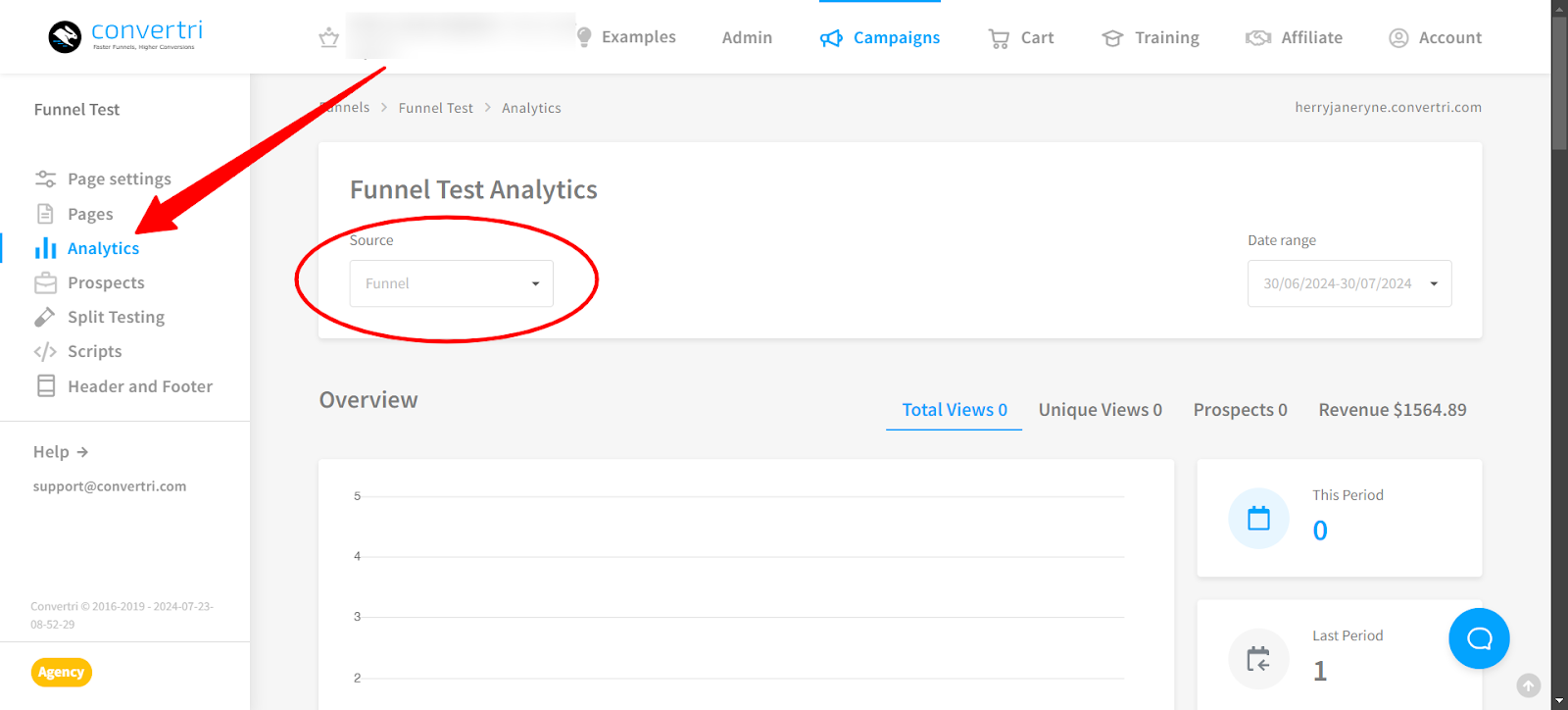
- Free Trial: Convertri offers a 14-day trial where you can build pages and test the platform with no risk.
Convertri can help you focus on strategy instead of tech, letting you create high-converting landing pages or funnels to match your goals.
FAQs
Q: What’s the difference between a sales funnel and a landing page?
A: Landing pages focus on one action; funnels cover the whole sales process.
Q: When should I use a landing page vs. a funnel?
A: Use a landing page when you have a single offer or want a quick action. For instance, a PPC campaign promoting a webinar might drive clicks to a landing page that captures email registrations. Use a sales funnel when you need to nurture leads or sell complex/high-ticket offerings. For example, if you’re launching a course, you might use a funnel: first an opt-in page (lead magnet), then a series of emails, then a webinar or sales page.
The funnel handles upsells and follow-ups. Choose based on your campaign goal – simple one-off = landing page; multi-step customer journey = funnel.
Q: Will a landing page convert better than a funnel?
A: It depends. A well-optimized landing page can show impressive conversion rates for its single goal. However, a funnel’s success is measured by the overall customer journey, not just the first page.
A landing page may have a higher immediate conversion, but a funnel can yield more lifetime conversions. The “better” one hinges on context: if your audience is already ready to act, a landing page may drive conversions quickly. If they need more persuasion, a funnel will ultimately convert more of them over time.
Q: Can I use a landing page as part of a funnel?
A: Yes. In fact, most funnels begin with a landing page, often called a lead generation or opt-in page. This landing page captures the visitor’s email or interest, which enters them into the funnel. Subsequent steps (thank-you pages, email sequences, upsell pages) then complete the funnel. The concepts work together: your landing pages feed the funnel.
Q: What are squeeze pages and sales pages? How do they fit in?
A: A squeeze page is a type of landing page, usually very minimal, designed solely to collect an email address (the “squeeze”). A sales page often refers to a longer landing page aimed directly at making a sale (full of benefits, testimonials, etc.). Both can be the opening step of a funnel or a standalone.
For example, a squeeze page (lead magnet offer) might feed subscribers into a funnel, whereas a long-form sales page might convert direct buyers without much follow-up.
Q: Do I need a funnel if I have a landing page?
A: Not necessarily. If your goal is simple (e.g., one-off signup or sale), a short form sales page alone might suffice. But if you want to generate leads, sell higher-priced items, or maximize customer value, then building a funnel around your landing page is beneficial.
Parting Thoughts
The better performer – funnel or landing page – is the one that fits your specific need. Weigh your goals, audience, and resources: do you have a simple campaign (landing page) or a multi-stage campaign (funnel)?
Whichever path you take, remember to test and optimize continuously. Monitor your metrics, tweak headlines and offers, and refine your pages. And if you need a versatile tool to help, platforms like Convertri make it easy to build both funnels and sales landing pages without coding.