Choosing Funnel Builders For Small Agencies: Features And Best Pick
Imagine you’re a small marketing agency trying to create high-converting sales funnels, but you’re drowning in separate tools. You have landing pages in one place, email campaigns in another, and analytics scattered everywhere. Funnel builders for small agencies promise to solve this headache, but which one should you pick?
Small agencies need the right funnel builder. Here’s why this decision is tougher than it looks:
- Too many choices: From drag-and-drop builders to full all-in-one platforms, the options are overwhelming.
- Hidden costs: Free plans often lack key features, pushing agencies into costly paid plans.
- One-size-fits-all tools: Many sales funnel software platforms are built for solopreneurs, not agencies managing multiple clients.
- Technical complexity: Some sales funnel tools require coding skills or too much setup, slowing down your team.
Agencies need software that balances speed, flexibility, affordability, and scalability. Without that, you risk wasting precious time and budget.
Key Takeaways:
- Funnel builders let small agencies design and launch marketing funnels without coding.
- Essential features include a user-friendly drag-and-drop builder, funnel and page templates, A/B testing, email and CRM integrations, mobile-responsive design, and reliable performance (fast page speed is non-negotiable).
- Dedicated funnel software often boosts lead generation and conversions.
- When in doubt, test platforms with free trials.
Convertri offers a trial and stands out for its fast page loads, flexible editor, and all-in-one funnel features.
Understanding Sales Funnels
A sales funnel is simply the step-by-step journey potential customers take before making a purchase. Think of it as a roadmap:
- Awareness – People discover your business through ads, SEO, or social media.
- Interest – They visit your landing pages or watch your videos.
- Decision – They sign up for your email marketing campaigns or click “learn more.”
- Action – They buy your product, book a call, or subscribe.
Without a funnel, website visitors come and go. With a funnel, you guide them toward conversion with custom landing pages, email marketing features, checkout pages, and more.
For small businesses and the agencies serving them, a funnel is like having a 24/7 salesperson that never takes a coffee break.
Why Small Businesses and Agencies Need Funnels
Small businesses and agencies often juggle multiple clients, limited budgets, and lean teams. A funnel builder becomes a force multiplier: it replaces many one-off tools (like a simple website builder plus a separate email service) with a cohesive funnel platform.
For busy agencies, this means you can build sales funnels quickly and consistently for each client, without reinventing the wheel every time.
Why is this so important?
Dedicated funnels convert better.
Studies show that dedicated landing pages can convert nearly 3 times better than sending email traffic to a generic homepage. That’s because a funnel builder usually includes features like lead magnets, opt-in forms, and focused sales pages that match your ads or email campaigns. This precision captures potential customers at each funnel stage.
For example, if a visitor clicks your Facebook ad, a funnel builder lets you send them to a specialized page with a clear message and call-to-action; instead of a one-size-fits-all site.
Small agencies often serve multiple clients or run multiple campaigns.
A funnel builder with multi-client management (sub-accounts, workspaces, or user roles) lets you keep each client’s data separate and under control. Without this, you risk cross-contaminating data or juggling dozens of logins.
In practice, that means one platform where you can switch between Client A’s funnels and Client B’s funnels seamlessly, each with its own branding.
A funnel builder typically includes marketing automation.
Instead of manually emailing every lead, the software can automatically send follow-up email sequences, text reminders, or push notifications based on user actions.
For example, once a visitor opts in to an email list, the funnel software can automatically send them a sequence of messages, reducing manual effort. This integrated automation boosts efficiency. It also ensures timely follow-ups, so you can focus on strategy rather than the drudge of emailing lists.
Funnels help you scale marketing efforts.
Instead of repeating the same process for every new ad or campaign, you can clone and tweak funnel templates. Many funnel builders offer sales funnel templates, including pre-designed pages for common stages like “lead capture” or “product launch”, saving time. This means you’re not coding pages from scratch or using a generic website builder that lacks conversion-focused design.
Funnel builders empower small business owners and agencies to create sales funnels and custom landing pages that generate leads and sales efficiently.
Evaluation Criteria for Agencies
When vetting funnel builders, agencies should specifically ensure the tool excels in these areas:
1. Page speed & reliability
Slow-loading pages kill conversions, especially when running paid ads. Even a one-second delay can lose you clicks and revenue.
Pick a platform with fast, CDN-backed hosting. Reliable uptime and SSL security are equally important so your funnels stay live and compliant.
Convertri boasts “lightning-fast page load speeds” and is among the fastest builders.
2. Editor workflow (free-form vs. block)
How you build pages impacts speed and creativity. Some tools use block-based or section-based editors, which can feel restrictive. Others, like Convertri, offer a free-form editor where you literally drag any element anywhere on the page.
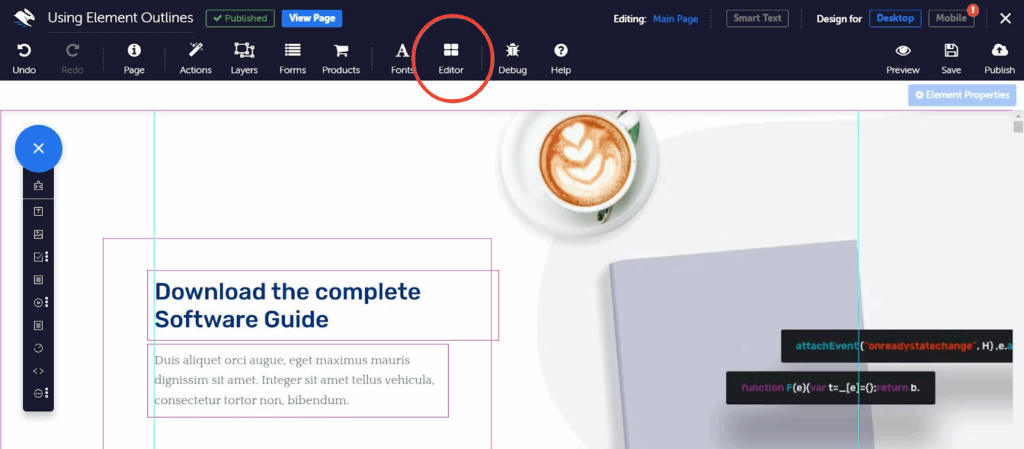
You should pick an editor style that your team can use efficiently. A free-form, Photoshop-style workflow lets designers execute creative layouts easily, while a structured block editor may be simpler for some beginners.
3. Multi-client management/user roles/workspaces
Agencies manage multiple accounts or clients, so multi-client support is a must. Look for features like sub-accounts, separate dashboards per client, and customizable user roles. This prevents cross-contamination of data between clients and keeps workflows organized.
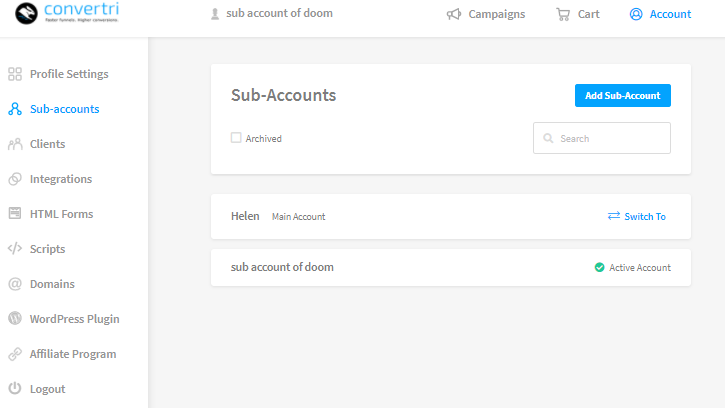
Some platforms even offer agency or white-label plans that let you bill and brand the software under your agency name.
4. Integrations (CRM, email, payments)
Ensure the funnel builder connects to your CRM for lead capture and management, email marketing service for campaigns, webinar or course platforms, and payment gateways.
The goal is to avoid manual data transfers. For example, Convertri’s platform integrates via API and Zapier with a huge range of popular services.
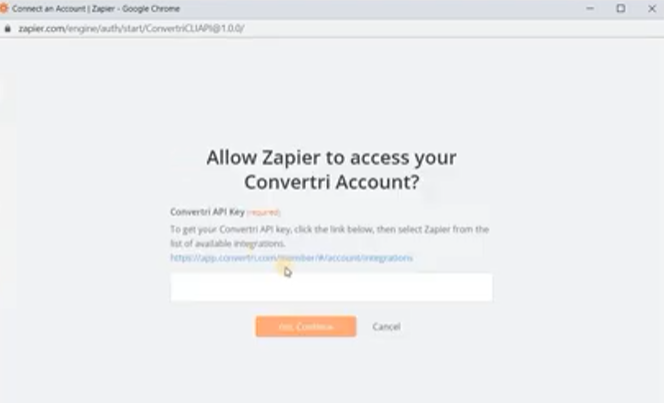
If you already rely on specific marketing tools, double-check that your funnel builder plays nicely with them.
5. Reporting, attribution & A/B testing
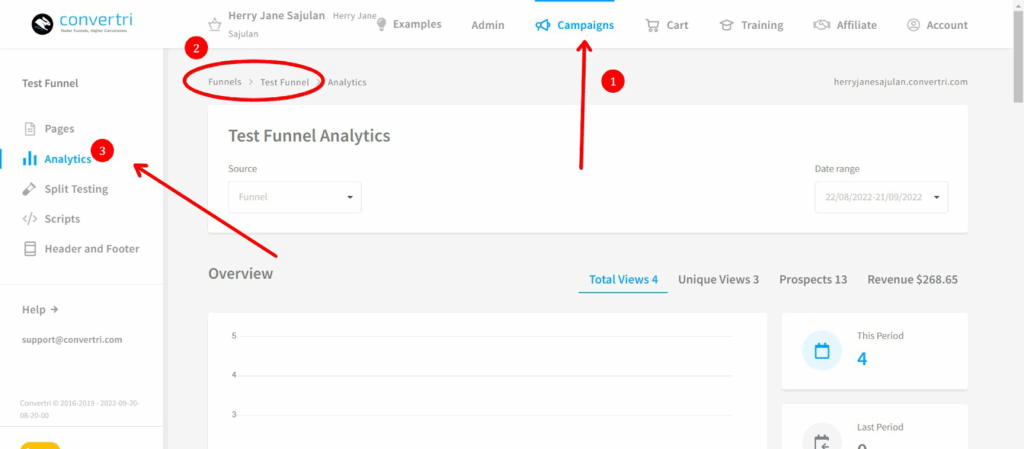
Good funnels don’t just collect data; they help you analyze it. The platform should have robust reporting dashboards and allow you to set up tracking (UTM parameters, pixels, etc.) to attribute conversions properly.
It should also support A/B tests on pages or entire funnel paths. Being able to see funnel drop-off points and compare variant performance lets you optimize for higher ROI.
In short, look for built-in funnel analytics and easy A/B split testing.
6. Pricing scalability, seats, and white labeling
As your agency grows, you might add team members and clients. Check how pricing scales with additional seats or funnels. Some systems charge per funnel or per client, others offer an agency plan with unlimited funnels.
Also consider white-labeling, which is the ability to remove the vendor’s branding so clients only see your brand. Agencies “want to brand it as their own,” making white-label a key feature. Ensure the platform’s pricing model fits your growth plans and budget.
7. Support, onboarding, SLAs
As a digital marketer, you need prompt support. Does the provider offer dedicated onboarding, tutorials, or even a client success manager? Check if they have Service Level Agreements (uptime guarantees) and multiple support channels (chat, email, phone).
Reliable support saves you from costly downtime or delays. As noted earlier, constant guidance (even 24/7 support) can reduce launch friction for new users.
Best Sales Funnel Software for Small Agencies
Now, let’s look at the top funnel builders for small agencies based on these criteria.
Convertri (Top Pick for Agencies)
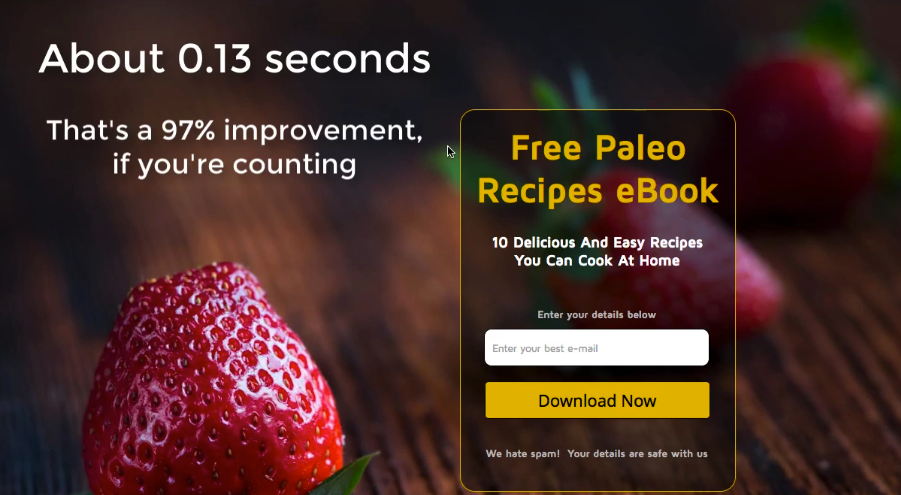
Strengths: Blazing-fast page speed, flexible drag and drop builder, and advanced agency features.
Why Agencies Love It:
- Unlimited landing pages and funnels
- White label support
- Affordable pricing that scales
- Mobile-responsive high-converting landing pages
- All-in-one platform with integrations for email marketing, CRM, and payments
Best For: Agencies that need speed, flexibility, and scalability without the complexity of other sales funnel software.
If your agency wants to build funnels that convert faster and manage multiple clients with ease, Convertri is your best bet.
ClickFunnels
- Huge library of funnel templates.
- Strong for online business coaches, course creators, and affiliate marketers.
- Downsides: Slower page speed, pricey paid plans, and a less flexible editor.
Kartra
- All-in-one platform with marketing automation, email marketing, and checkout pages.
- Great for small business owners who want all the features in one place.
- Downsides: Can feel bloated with tools that agencies may not use.
Leadpages
- Simple landing page builder with a drag and drop editor.
- Good for early-stage businesses running lead generation campaigns.
- Downsides: Limited funnel-building features compared to dedicated funnel builders.
Why Convertri Stands Out
| Feature | Convertri | Other Sales Funnel Software |
| Page Speed | ⚡ Ultra-fast load times (boosts sales) | Often slow and heavy |
| Agency Features | ✅ White label, workspaces, agency unlimited account | ❌ Usually focused on single businesses |
| Scalability | Unlimited funnels & landing pages | Limited funnels unless on higher paid plans |
| Editor Workflow | Flexible drag and drop editor with free-form control | Restrictive block or rigid templates |
| Pricing | Affordable, scalable paid plans | Higher costs, hidden add-ons |
| Support | Dedicated support team with onboarding | Generic support, longer response times |
With Convertri, agencies create high-converting, scalable, and client-ready systems that outperform other tools.
FAQs
Q: What is the best sales funnel builder for small agencies?
A: Convertri is widely considered the best funnel builder for agencies thanks to its speed, scalability, and agency-focused features.
Q: Can small businesses use sales funnel software, too?
A: Yes. Funnel builders help small businesses boost sales by turning website visitors into paying customers through effective sales funnels.
Q: Do I need coding skills to use a funnel builder?
A: Not at all. Most tools offer drag-and-drop editors that are user-friendly and require no coding.
Q: How much does sales funnel software cost?
A: Pricing varies from free plans (with limited features) to pro plans and agency accounts. Expect $30–$300/month depending on scale. For Convertri, pricing starts at $99 per month, but you’ll get 25% off if you go with the annual plan.
Q: Can I manage multiple clients with one funnel builder?
A: Yes, but choose a funnel builder that supports workspaces, user roles, and ideally white label features for agencies.
Parting Thoughts
For digital marketing agencies, sales funnels are the backbone of successful client campaigns. Choosing the right sales funnel builder software can mean the difference between struggling with clunky tools or scaling your agency with confidence.
While other sales funnel software may tick some boxes, Convertri shines as the best funnel builder for small agencies. It balances speed, flexibility, and affordability with the advanced features agencies need.
If you’re ready to boost sales, streamline client campaigns, and build successful businesses, it’s time to pick a funnel builder that works as hard as you do.
Start building high-converting funnels with Convertri today!