
How to Create a Digital Business Plan
“Business plans.” Boring, right? Not so.
A good business plan makes success more likely. A good digital business plan is the compass that helps steer your ship through a storm. And it makes you feel incredibly professional when you write one.

In a nutshell, a business plan is a written document that describes your business. It covers objectives, strategies, sales, marketing, and financial forecasts.
A business plan helps you to:
- Clarify your ideas
- Spot potential problems
- Define your goals
- Measure your progress
Moreover, if you ever want to secure an investment or a loan from a bank, a business plan is essential. And if you plan on working with suppliers or other means of support, this can help convince them to support you.
Even if you only plan on reading your business plan yourself (maybe once a year at Christmas), it helps to have one, write it as if you were speaking to outsiders, and structure it properly.
Here’s how to do it.
Don’t just plan your business—build it. Design your digital marketing strategy that actually converts.
Define your digital products and services
Let’s start at the beginning: who are you? What do you do? What do you sell?
First of all, explain the history of your business. When did it start trading, and what progress have you made to date? If the business is a new start-up, what is your personal background in the industry, and what steps towards setting up have you made so far?
Once you go over the ins and outs of your business, it’s time to discuss your products. Describe what your product or service is, your USP’s and what sets you apart from the competition. What benefits does it offer? What are its disadvantages, if any, and how do you plan on addressing them?
For example:
- If you run an online fitness platform, explain how your app offers personalized workout plans instead of generic ones.
- If you sell digital art prints, talk about how your designs are eco-inspired or locally themed, giving your store a unique touch.
Next, it’s time to put all of this into context. Go a bit deeper into your industry: explain key features and any special regulations, whether the industry is dominated by a few large companies, or whether you rely on certain technologies or software to create or deliver your products.
Identify your online market and competitors
You’ve described what you do; now it’s time to describe what others do.
It’s worth going into detail about your target audience here. Who are you selling to, and who are your best customers? Describing your audience in depth not only helps others who read your business plan but also serves as a useful reference when planning future marketing efforts.
Highlight the market you operate in. How large is it? What is your market share? Describe your main alternatives, what sets you apart, and how you differentiate yourself from the competition.
For example:
- If you sell eco-friendly skincare, your competitors might be brands like The Body Shop or smaller organic skincare lines. You could stand out by focusing on refillable packaging or locally sourced ingredients.
- Or if you run an online course for small business owners, your competitors might include platforms. Your edge could be live mentoring or step-by-step business templates that make learning easier.
In this section, you can also talk about important trends such as market growth, changing tastes, or audience shifts. Explain the reasons for those trends and how you plan on riding those out.
Your success starts with a plan. Get Convertri to build, launch, and scale your business with confidence.
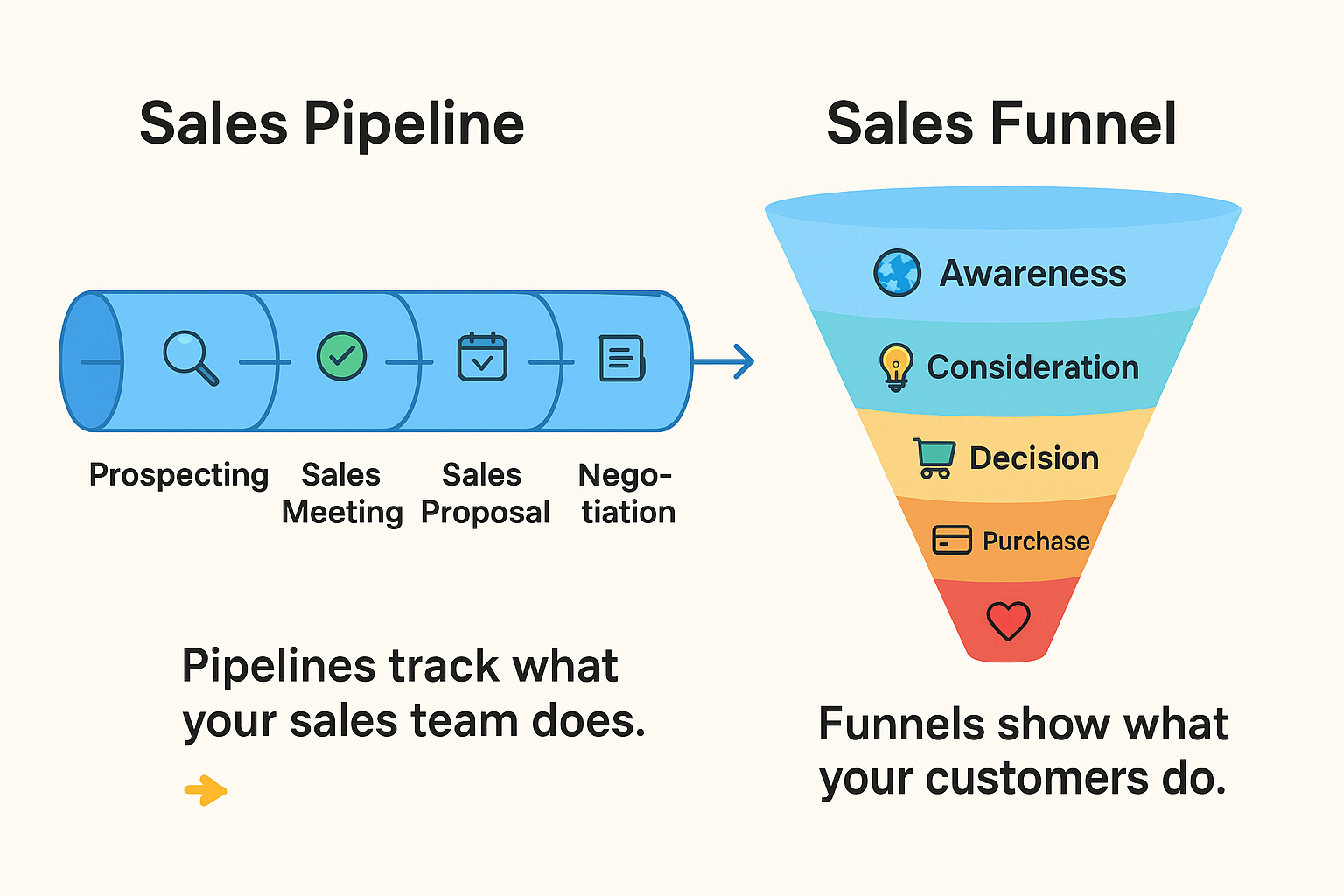
Create a sales and marketing funnel
In this section, you should think about how you plan on promoting what you sell. How do you position your offering? Are you marketing it as a specialist product due to a particular feature or a more general kind of product for a greater segment of the population?
Here’s how to do it:

List core benefits and features
When you’re a little too close to see the wood for the trees, it helps to “zoom out” and remind yourself of your core offering. Use this section to plan which features and benefits you currently focus on and which you may highlight later as part of your broader digital business strategy to reach a different audience.
Outline your pricing strategy
Next, go into your pricing structure and if you plan on raising prices or reacting to market changes at any point. Include any research you’ve done to support arguments you make, especially about how customers might react to price increases.
Highlight bestsellers and opportunities
It’s also a good idea to describe your “best seller” products, or which you think will be best sellers, and how you plan on capitalizing on those opportunities.
Don’t forget to describe your product margins and, if there are any, current or future opportunities to reduce overheads and grow profits.
Develop your marketing approach
Now for the marketing part: how do you market your product or service? What social media channels do you use to reach your target customers, and do you use—or plan on using—paid advertising?
Compare your current channels with the alternatives. Then, note the distribution channels used by your competitors, and weigh up the pros and cons. Don’t forget to describe why you’ve chosen to use—or not to use—particular marketing ideas that your competitors have found success with.
Measure financial performance
Finally, outline marketing costs, your customer acquisition costs, and average sales value. It’s worth crunching the numbers on these ones to get an accurate picture of how your digital strategy will work.
Plan operations and team workflow
It’s possible that you work from home, have few (if any) related bills and overheads, and have no storage space or property concerns – if so, great! Make sure you write all that down here.
But if you’re in the ecommerce space, for example, you’ll have to consider where to store your stock as well as packaging facilities and delivery options. How do you plan on tackling these challenges?
Describe your business premises and whether they meet your current and future needs. Should the business expand or move right now, or do you plan to in the future?
What kind of equipment or packaging supplies do you use, and how are production and distribution organised? Bear in mind that these questions will usually only apply to physical businesses, but if you deal in digital products, it’s worth outlining your production and download processes here as well.
List your key suppliers, subscriptions, and software that make your business possible. Are they reliable? Do you need to have alternatives waiting in the wings? What happens if they go offline or shut down unexpectedly? How will you deal with business interruptions?
IT is one of the most important sectors in any business nowadays. How reliable are your IT systems, and what are your cyber security protocols? Even up-to-date antivirus software should be included in your business plan.
Your roadmap to digital success starts here. Craft your digital business plan in minutes.
Forecast finances and growth
Everyone’s favourite section. It’s time to crack open that spreadsheet and crunch some numbers!
Set out historical financial information, if applicable. Describe cash flow, major start-up expenses, and anything else that’s relevant.
When it comes to describing your current financial situation, provide an up-to-date balance sheet and a profit and loss account if you have one. Explain the reasons for shifts in profitability, working capital, and cash flow. Compare them with industry norms – do the financial forecasts look good or bad? And if it’s the latter, how do you plan on improving?
Be realistic: no one can predict the future. But if you look at the data, it is possible to come up with a reliable forecast that puts investors’ minds at ease and charts a steady course for success.
Did you know that small business advisors at banks and business support organisations may be able to help you put together financial forecasts free of charge? It’s worth reaching out for help if numbers aren’t your strong suit.
Perform a SWOT analysis
Now it’s time to SWOT it up. SWOT stands for Strengths, Weaknesses, Opportunities, and Threats, and it serves as a handy summary of all the most important points you’ve made so far.
- Strengths might include your brand visibility or an effective digital marketing strategy.
- Weaknesses could be limited funding or overreliance on one channel.
- Opportunities might involve new audience segments or innovative digital tools.
- Threats could include increased competition or changing algorithms that affect your marketing efforts.
Be honest. Every business has weaknesses; what matters is how you plan to address yours. As always, set clear, actionable targets to set readers’ minds at ease.
You’ll be glad to know that’s enough for now. Whether you scribble it on the back of an envelope or craft a 46-page magnum opus with embedded fonts and tables, a solid business plan needs to be down-to-earth, realistic, and understandable. When you have one, it helps get you through tough times and keeps you on course.
Ready to stop drifting and start scaling? Get Convertri now and create the business plan that will guide your next big win.
Do you have a business plan, or do you want to write one? Leave a comment and let us know!